VOLCANOES NATIONAL PARK RWANDA WEATHER & CLIMATE
Planning a Rwanda safari but curious about the Volcanoes National Park Weather & Climate/weather and climate in Volcanoes National Park, Rwanda? Worry less, in this article, we break down everything you need to know about the Volcanoes National Park Rwanda weather, and the climate!
Volcanoes National Park, Rwanda, locally known as Parc National des Volcans, sits high in the Virunga Mountains and offers a cool, misty, tropical highland climate that surprises most first-time visitors expecting typical hot African weather.
Because of its high altitude and location just south of the equator, daytime temperatures stay comfortable between 15-22 °C, nights drop to 6-12 °C, mist is almost daily, and rain can fall at any moment throughout the year.
This unique combination creates the perfect habitat for the famous mountain gorillas, golden monkeys, lush rainforests, and bamboo zones, but it also means visitors must always pack waterproof clothing, warm layers, and sturdy hiking boots regardless of the month they choose to travel.
Let us delve into a detailed overview of the weather and climate of Volcanoes National Park!
Overview of Volcanoes National Park, Rwanda
Volcanoes National Park, Rwanda, lies in the northwest of the country, just a 2-2.5 hour scenic drive from Kigali International Airport.
Covering roughly 160 km², it protects five of the eight Virunga volcanoes – Karisimbi (4,507 m), Bisoke, Sabyinyo, Gahinga, and Muhabura – and forms part of the greater Virunga conservation area shared with Uganda and DRC.
Established in 1925 as Africa’s very first national park, it is world-famous for mountain gorilla conservation pioneered by Dian Fossey.
Besides the endangered mountain gorillas, the park hosts golden monkeys, forest elephants, buffaloes, spotted hyenas, duikers, bushbucks, and over 200 bird species.
Its high-altitude ecosystem delivers cool temperatures, high humidity, and frequent rain year-round, perfect for Rwanda safari excursions.
The Four Seasons in Volcanoes National Park, Rwanda
Long Dry Season – June to September (Best & Peak Season)
June through September is the long dry season and the most popular time to visit Volcanoes National Park, Rwanda.
Rainfall is minimal, trails are drier and far less slippery, and mountain gorilla families stay lower in the bamboo forests searching for food, resulting in shorter, easier treks. Daytime temperatures range from 18 to 22 °C with plenty of sunshine, clear volcano views, and comfortable hiking conditions. Nights remain cool.
This is peak season, so gorilla permits and luxury lodges book out 9-12 months in advance. July and August are the busiest months.
Short Dry Season – December to mid-February (Second Best Time)
December to mid-February offers the short dry season – another excellent period for Rwanda gorilla trekking and volcano hiking.
Skies are mostly clear, afternoon showers are brief, and visitor numbers drop after the Christmas/New Year rush, giving quieter trails and occasional lodge discounts.
Daytime temperatures average 20-22 °C with crisp, fresh mornings. Gorilla families are still relatively easy to reach, and the landscape stays beautifully green.
Perfect for travellers on safaris to Rwanda who want great weather without the intense June-September crowds.
Long Rainy Season – March to May (Low Season)
March, April, and May bring the heaviest rainfall of the year with daily afternoon downpours that turn trails into slippery and muddy.
Mountain gorilla groups move higher up the volcanoes, making treks longer and more physically demanding (sometimes 6-8 hours).
Thick mist often reduces visibility, yet the forest explodes in vibrant green and wildflowers.
Visitor numbers are lowest, gorilla permits are easy to secure last-minute, and many lodges offer 30-50 % discounts.
Ideal for budget travellers on Rwanda tours who don’t mind mud.
Short Rainy Season – mid-October to November
October and November form the shorter rainy season. Rainfall is frequent but usually less intense than March-May, with longer sunny intervals and dramatically lush scenery.
Trails can still be slippery, and mist is common, but trekking remains very doable. Photography enthusiasts love the emerald forests and dramatic clouds.
Gorilla permits and accommodation are easier to book, and prices are lower. November is historically the single wettest month of the year.
Climate Characteristics in Volcanoes National Park, Rwanda
Temperature
Due to high altitude (2,400-4,507 m), temperatures remain cool and stable all year. Daytime temperatures average 15-22 °C (59-72 °F), while nights and early mornings drop to 6-12 °C (43-54 °F).
On Mount Karisimbi summit, it can reach 0 °C with occasional frost or snow.
Temperature falls approximately 6.5 °C for every 1,000 m climbed, so hikers feel the chill quickly when gaining elevation.
Rainfall
Volcanoes National Park, Rwanda receives 1,500-2,000 mm of rainfall annually, with precipitation possible almost 300 days a year.
Even the “dry” months experience occasional showers. The wettest months are March, April, and November.
Rain typically arrives in intense afternoon bursts rather than all-day drizzle, leaving mornings often clear and sunny.
Mist and low cloud are daily features around the park headquarters in Kinigi.
Humidity
Humidity stays high (80-95 %) throughout the year because of dense rainforest and constant mist.
During rainy seasons, the air feels damp and heavy; in dry seasons, it drops slightly but remains noticeably moist compared to savannah parks.
Combined with cool temperatures, the damp conditions make everything feel colder than the thermometer shows – warm layers and quick-dry clothing are essential every single day.
Key Factors That Influence the Climate and Weather in Rwanda’s Volcanoes National Park
High Altitude
The park’s elevation of 2,400-4,507 m is the primary reason for cool temperatures, frequent mist, and high rainfall. Warm equatorial air rises, cools rapidly, and condenses into clouds, creating the misty, wet conditions that define the park’s climate and support its unique montane ecosystem.
Equatorial Location
Only 2° south of the equator, the park receives almost equal daylight year-round and consistent solar radiation. This prevents extreme seasonal temperature swings but, when combined with altitude, triggers daily cloud build-up and afternoon showers typical of highland equatorial zones.
Rainfall Patterns
Two rainy seasons (March-May & October-November) and two drier periods are caused by the twice-yearly passage of the Inter-Tropical Convergence Zone. Western volcanoes (Karisimbi, Bisoke) receive more rain than eastern ones due to prevailing wind direction.
Topography & Mountains
The five massive volcanoes act as giant barriers, forcing moist air from the Congo basin upwards. This orographic lift creates heavy precipitation on the windward slopes, explaining why Volcanoes National Park, Rwanda, is significantly wetter than the surrounding lowlands.
Dense Rainforest
Thick montane and bamboo forest transpires enormous amounts of water vapour, maintaining local humidity and feeding the daily mist that often shrouds the volcanoes by late morning, giving the park its mystical atmosphere.
Temperature Gradients
Steep altitudinal change means you can start a trek at 15 °C in the forest and reach near-freezing conditions above 4,000 m within hours. Layering clothing is absolutely critical for comfort and safety.
Best Time to Visit Volcanoes National Park, Rwanda
The absolute best time for most travellers is the long dry season, June-September, when trails are driest, gorilla sightings are easiest, and views are clearest. December to mid-February is an excellent second choice with good weather and fewer crowds.
Rainy seasons, March-May and October-November, offer lush scenery, dramatically lower prices, and far fewer tourists, though treks are muddier and longer. There is truly no bad time – only different experiences and budgets.
How Does the Weather Affect Your Activities?
Dry seasons mean shorter gorilla treks (1-4 hours), clearer volcano views, easier golden monkey tracking, and safer Mount Bisoke or Karisimbi climbs.
Rainy seasons bring longer, tougher treks (4-8+ hours) as gorillas move higher, slippery trails and reduced visibility, but spectacularly green scenery and almost private experiences with far fewer visitors. Rain is possible any day.
What To Wear & Pack for Volcanoes National Park Weather – Any Time of Year
- Waterproof, breathable rain jacket and rain trousers (mandatory 365 days)
- Warm fleece or light down jacket for cold mornings/evenings
- Long-sleeved quick-dry shirts and long trekking trousers (no shorts)
- Waterproof hiking boots with strong ankle support and grip
- Thick gardening-style gloves for stinging nettles and bamboo
- Gaiters to keep mud and insects out of boots
- Warm hat, buff/neck gaiter, and lightweight gloves
- Several pairs of thick hiking socks
- Wide-brimmed hat, sunglasses, and high-factor sunscreen
- Strong insect repellent and long clothing
- Dry bag or waterproof backpack cover
- Reusable water bottle and high-energy snacks
- Walking stick (most lodges provide one free)
Additional Information to Consider When Planning a Rwanda Safari to Volcanoes National Park During the Different Seasons
Things to see in Volcanoes National Park, Rwanda
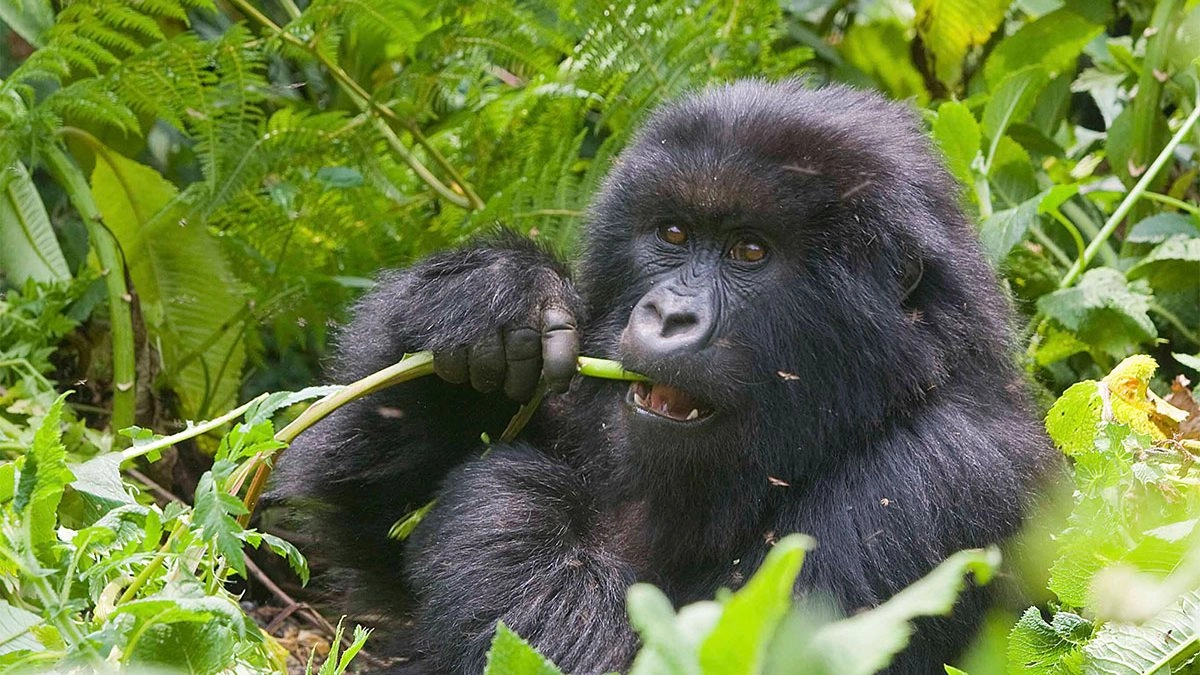
THE DRY SEASON: Clear panoramic views of all five volcanoes, mountain gorillas feeding low in bamboo zones, playful golden monkeys swinging through sunlit trees, forest elephants and buffaloes on lower slopes, blooming wildflowers, and spectacular sunrises over the Virunga chain.
THE WET SEASON: Vibrant emerald rainforest, waterfalls at full flow, newborn gorilla babies (peak birthing Feb-Mar), dramatic storm clouds rolling over the peaks, lush vegetation perfect for photography, and an almost private park with very few other visitors.
Things to do in Volcanoes National Park, Rwanda
THE DRY SEASON: Gorilla trekking, golden monkey trekking, Mount Bisoke day hike with Crater Lake, Mount Karisimbi 2-day expedition, Dian Fossey grave and Karisoke Research Centre hike, birdwatching, and landscape photography.
THE WET SEASON: Gorilla and golden monkey trekking (muddier but still magical), cultural visits to Iby’Iwacu village, twin lakes Burera & Ruhondo boat trips, relaxing at luxury lodges with volcano views and indoor spa treatments.
Where To Stay in Volcanoes National Park?
Luxury Options: Bisate Lodge, Singita Kwitonda Lodge, One&Only Gorilla’s Nest, Sabyinyo Silverback Lodge (book 12+ months ahead for dry season).
Mid-Range: Five Volcanoes Boutique Hotel, Mountain Gorilla View Lodge, Virunga Lodge, Le Bambou Gorilla Lodge.
Budget: Kinigi Guesthouse, Muhabura Hotel, Da Vinci Lodge (wet-season discounts common).
Costs Of Visiting Volcanoes National Park, Rwanda
DRY SEASON
- Gorilla Permit: $1,500
- Luxury Lodge: $900–$2,500 per person per night
- Mid-Range: $300–$600
Peak-season supplements apply.
WET SEASON
- Rwanda gorilla permit still $1,500 (easier availability)
- Luxury and mid-range lodges frequently offer 30–50 % discounts
- The overall trip cost can drop 25–40 %.
Guidelines To Follow When Visiting Volcanoes National Park, Rwanda
- Minimum age for gorilla trekking: 15 years
- Maximum 8 visitors per gorilla family per day
- Keep a 7-metre distance from gorillas
- No flash photography
- Wear a face mask when near gorillas
- No food or drink near gorillas
- Maximum 1 hour with the gorillas
- Do not trek if sick
- Follow the guide instructions at all times
- No littering
- No smoking in the park
How To Get to Volcanoes National Park in Rwanda?
The easiest and most common way is to fly into Kigali International Airport (KGL), Rwanda’s modern hub with direct flights from Europe (Brussels, Amsterdam, Paris, London), the Middle East (Dubai, Doha), and many African cities (Addis Ababa, Nairobi, Entebbe, Johannesburg).
From Kigali, it is a scenic 2–2.5-hour drive (approximately 115 km) northwest on smooth, well-maintained tarmac roads through Rwanda’s famous thousand hills to Kinigi park headquarters, the starting point for all gorilla treks.
Most visitors use a private 4×4 vehicle transfer arranged by their lodge or tour operator – usually included in Rwanda safari packages.
Self-drive is possible with a rented 4×4, and reliable helicopter transfers (20–25 minutes) are available for those wanting to maximise time or travel in style. No domestic flights are needed.
Other East African Safari Parks That Share Similar Weather Patterns with Volcanoes National Park, Rwanda
- Nyungwe Forest National Park (cooler, wetter highland rainforest)
- Gishwati-Mukura National Park (similar altitude and climate)
- Mgahinga Gorilla National Park, Uganda (same Virunga volcanoes)
Outstanding Rwanda Safari Agents Offering Trips to Rwanda’s Volcanoes National Park
- Prime Safaris and Tours Ltd
- Wild Gorilla Safaris
- Gorilla Safari Rwanda
- Rwanda Gorilla Tracking Safaris
- Gorilla Tracking Rwanda
- Africa Safaris Tours
- Gorilla Safaris and Tours
The Best Safari Packages to Consider for Safaris to Volcanoes National Park
- 3-Day Gorilla Trekking Fly-In
- 5-Day Gorillas & Golden Monkeys
- 7-Day Gorillas + Nyungwe Chimps
- 10-Day Ultimate Rwanda Primates & Akagera National Park
Commonly Asked Questions About the Weather and Climate in Volcanoes National Park, Rwanda
- What’s The Typical Weather in Volcanoes National Park Like?
Cool and misty year-round with daytime temperatures 15-22 °C, nights 6-12 °C, high humidity and rain possible any day – very different from hot savannah parks.
- When Are the Dry and Wet Seasons in Volcanoes National Park?
Dry seasons: June-September (long) & December-mid February (short).
Wet seasons: March-May (long) & mid-October-November (short).
- Is It Always Raining in Volcanoes National Park?
No, but rain or thick mist occurs almost daily, even in dry months; dry seasons simply have shorter, less frequent showers.
- What Should I Pack for Safaris in Volcanoes National Park?
Waterproof jacket/pants, warm fleece, sturdy hiking boots, gardening gloves, gaiters, hat, sunscreen, and plenty of layers – rain is possible every day.
- Can I Visit Volcanoes National Park During the Rainy Season?
Yes! You’ll enjoy lush green scenery, fewer crowds, and big discounts, though trails are muddy and treks are longer and more challenging.
- Does The Weather Change a Lot in Volcanoes National Park?
Yes – clear sunny mornings can turn into heavy afternoon rain and thick mist within minutes; always carry full rain gear.
Conclusion
Volcanoes National Park, Rwanda, delivers one of the world’s most extraordinary wildlife experiences wrapped in a cool, misty highland climate. Whether you choose the sunny dry months or the lush green rainy season, prepare for cool temperatures, possible rain, and life-changing encounters with mountain gorillas and golden monkeys. Pack properly, secure your permits early, and get ready for the adventure of a lifetime in Africa’s most beautiful rainforest.
Contact us now and let us tailor the best Rwanda safari package for you!
What you may like
-
What To Wear On A Safari In Volcanoes National Park
Read more -
What To Carry To Volcanoes National Park/Packing List On Safari
Read more -
Volcanoes National Park Rules And Regulations
Read more -
Rwanda Gorilla Families in Volcanoes National Park – Gorilla Groups Rwanda
Read more -
Attractions In Volcanoes National Park- Best Things To See
Read more -
History of Volcanoes National Park Rwanda
Read more
Want to visit Volcanoes Park?
Want to visit Volcanoes National Park, Rwanda's only mountain gorilla trekking park?
